2022-04-6
Selective Laser Sintering (SLS) and Selective Laser Melting (SLM) are both powder-bed-fusion additive manufacturing processes, but they are normally used for different materials and applications. In modern industrial use, SLS is most commonly associated with polymer powders such as nylon, while SLM is a metal laser powder-bed-fusion process in which metal powder is fully melted to create dense metal components.
The two processes share a similar layer-by-layer workflow, but material behavior, support requirements, post-processing, surface finish, cost, and final part performance can be very different. Understanding these differences helps engineers choose the correct process for functional prototypes, low-volume production, metal parts, tooling inserts, and product-development projects.
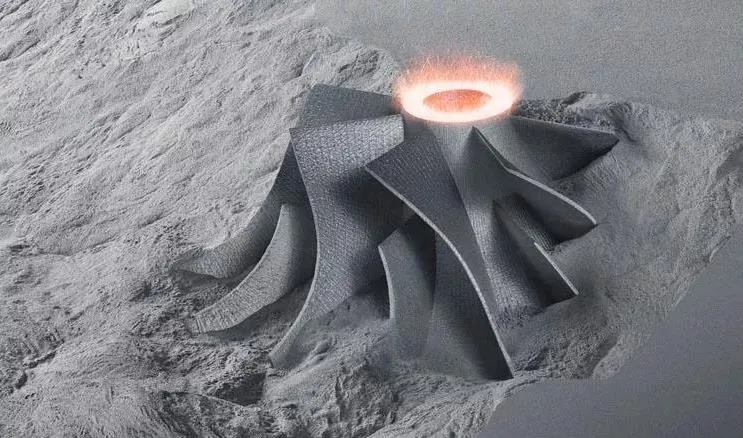
This guide covers the main differences between SLS and SLM:
• What is the difference between SLS and SLM?
• Can SLM be used for injection mold tooling?
• FAQ
The simplest distinction is that SLS is commonly used for polymer powder, while SLM is used for metal powder. Both spread a thin layer of powder and use a laser to selectively fuse the cross-section of the part before adding the next layer.
The terminology can be confusing because older technical literature and some equipment suppliers have also used the term SLS for metal powders. Today, metal processes are more commonly described as SLM, DMLS, or more generally Laser Powder Bed Fusion (LPBF). For buyers, the material, machine, and process specification are more important than the marketing name alone.
A common oversimplification is that SLS always heats powder “below the melting point.” In polymer SLS, the laser locally fuses or melts polymer particles. In SLM, metal powder is fully melted to form a dense metallic structure. The practical difference is therefore better understood through material type, fusion behavior, and processing requirements.
SLS begins with a bed of powdered thermoplastic. A recoater spreads a thin layer of powder across the build platform, and a laser scans the areas defined by the digital model. After one layer is fused, the platform moves and another layer of powder is applied.
One of the major advantages of polymer SLS is that the surrounding unfused powder supports the part during printing. This means most SLS polymer parts do not require separate support structures, which gives designers considerable freedom for internal channels, complex shapes, clips, brackets, and nested parts.
PA12 / Nylon 12
PA11
Glass-filled or mineral-filled nylon grades
TPU and selected flexible thermoplastic powders
Other application-specific polymer powder systems
SLS is widely used for functional prototypes, clips, brackets, housings, ducts, jigs, fixtures, small-batch plastic parts, and geometries that are difficult to manufacture with conventional machining.
SLM uses a high-energy laser to fully melt selected regions of metal powder. The process is normally carried out in a controlled inert atmosphere, and each melted layer solidifies and metallurgically bonds to the layer below.
Unlike polymer SLS, metal SLM parts normally require support structures. Supports help anchor the component to the build plate, conduct heat, and control distortion caused by thermal stresses. After printing, metal parts commonly require stress relief or other heat treatment, support removal, and—in precision applications—CNC machining, grinding, polishing, or other finishing.
Stainless steels
Tool and maraging steels
Aluminum alloys
Titanium alloys
Nickel-based alloys
Cobalt-chrome and other qualified metal systems
| Factor | SLS | SLM / Metal LPBF |
|---|---|---|
| Common material | Thermoplastic powders, especially nylon | Metal powders and alloys |
| Fusion mechanism | Laser fuses polymer powder layer by layer | Laser fully melts metal powder to form dense metal |
| Support structures | Usually unnecessary because surrounding powder supports the part | Normally required for anchoring, heat transfer, and distortion control |
| Post-processing | Powder removal, bead blasting, dyeing or finishing as required | Heat treatment, support removal, machining, grinding, polishing or surface finishing may be required |
| Typical use | Plastic prototypes, functional parts, low-volume polymer production | Metal prototypes, aerospace/medical components, complex metal parts, tooling inserts |
| Cost profile | Usually more economical for polymer prototypes and nested batch builds | Typically higher because of metal powder, equipment, supports, heat treatment, and finishing |
You need strong functional plastic prototypes
The geometry contains internal channels or complex features
You want to avoid support marks on polymer parts
You need multiple different plastic parts nested in one build
The project quantity is too low to justify injection mold tooling
You need a functional metal component rather than a plastic prototype
The geometry contains internal channels or shapes that are difficult to machine
Part consolidation can eliminate several machined and assembled components
Weight reduction through lattice or topology-optimized geometry is important
You need a metal tooling insert with conformal cooling channels
For early product-development projects, SLS can be a practical rapid prototyping option, while SLM is more appropriate when the prototype must behave like a metal component or when the geometry cannot be produced efficiently by conventional machining.
Additive manufacturing builds the part layer by layer, while CNC machining removes material from a solid block. Neither process is universally better.
SLS and SLM are particularly attractive for complex internal geometries, lightweight lattice structures, part consolidation, and low-volume parts where dedicated tooling is not economical. CNC machining is often preferable when the geometry is accessible to cutting tools and the project requires very tight machined features, smooth surfaces, standard engineering materials, or economical repeat production.
| Project Requirement | Process to Evaluate |
|---|---|
| Complex internal channels in a polymer part | SLS |
| Complex metal geometry or lattice structure | SLM / metal LPBF |
| High-quality machined surface and accessible geometry | CNC machining |
| Many functional plastic prototypes without tooling | SLS |
| Production-grade thermoplastic behavior must be evaluated | Prototype injection molding |
Yes, but this needs to be described accurately. Metal additive manufacturing is commonly used to produce mold inserts rather than replacing every conventionally machined mold component.
One important application is a metal insert containing conformal cooling channels. Conventional drilling generally creates straight cooling passages, while metal powder-bed fusion can create channels that follow the shape of the cavity or core more closely. This can improve thermal control in difficult areas and may help reduce cooling imbalance or cycle time when the application justifies the additional tooling cost.
SLS polymer parts, by contrast, are generally used as prototypes, patterns, fixtures, or development aids rather than as direct high-pressure steel injection mold cavities.
For projects that require production-grade plastic parts before full production tooling, a prototype injection mold is usually the more direct way to validate resin behavior, shrinkage, weld lines, assembly, and molded-part performance.
No. They are both powder-bed-fusion processes, but modern SLS is most commonly used for polymer powders, while SLM is a metal process that fully melts metal powder.
Polymer SLS normally does not require separate support structures because the surrounding unfused powder supports the part during printing.
Metal SLM normally requires supports to anchor the part, manage heat transfer, and control distortion. The supports are removed after printing.
Surface quality depends on material, machine, layer thickness, orientation, and finishing. Both SLS and SLM normally have a visibly additive-manufactured surface directly from the machine. Precision metal surfaces often require machining or polishing after SLM.
They can replace tooling for some low-volume or highly complex parts, but injection molding remains more economical for many repeat-production plastic parts once the volume justifies the mold investment.
SLS is a strong choice for functional polymer prototypes and low-volume plastic components with complex geometry. SLM is better suited to complex metal parts and specialized tooling inserts. CNC machining remains valuable for precision parts with machinable geometry, while injection molding becomes attractive when repeatable production-grade plastic parts are needed at higher quantities.
HWPD supports rapid prototyping, CNC machining, prototype tooling, prototype and production injection molds, and plastic injection molding so the manufacturing process can be selected according to the actual product stage rather than forcing every project into one technology.
Send your 3D model, material requirement, quantity, tolerance, and application information to HWPD for a manufacturing-process review and quotation.